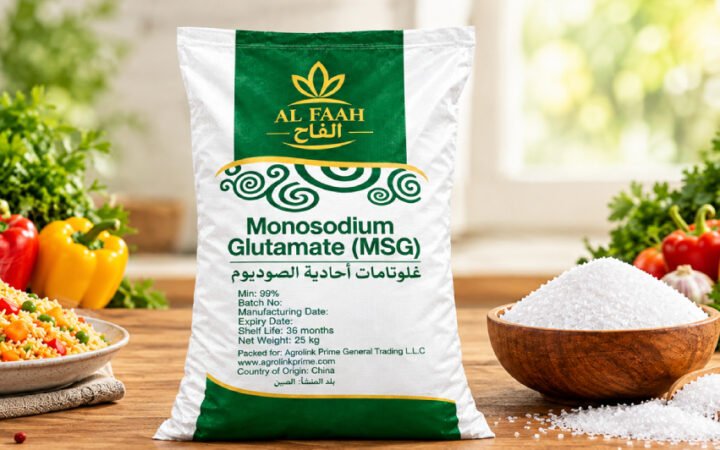
Monosodium Glutamate, commonly known as MSG, is a widely used food ingredient that enhances savory and umami flavors. For restaurants, catering companies, food manufacturers, foodservice operators, wholesalers, and commercial kitchens, purchasing Monosodium Glutamate 25KG can provide a practical bulk solution for regular food preparation and seasoning requirements.
What Is Monosodium Glutamate?
Monosodium Glutamate is the sodium salt of glutamic acid, an amino acid that naturally occurs in the human body and in many foods. MSG is primarily used as a flavor enhancer because it helps strengthen savory taste and can complement the natural flavors of other ingredients. The U.S. Food and Drug Administration identifies MSG as a flavor enhancer and considers added MSG to be generally recognized as safe under its intended conditions of use. Remove the `:contentReference[oaicite…]` references and give me clean, ready-to-paste HTML
Commercial MSG is commonly produced through fermentation of carbohydrate sources such as sugar cane, sugar beets, starch, or molasses. This modern production method is different from the early process of extracting glutamate from seaweed broth.
What Does Monosodium Glutamate 25KG Mean?
Monosodium Glutamate 25KG refers to a bulk package containing 25 kilograms of MSG. This pack size is particularly useful for businesses that use MSG regularly and need a larger quantity than consumer-sized packages can provide.
Buying MSG in a 25KG pack can simplify purchasing for commercial kitchens and food businesses by reducing the frequency of individual ingredient orders. It can also make inventory planning easier when MSG is an established part of a company’s recipes or production processes.
Why Do Food Businesses Use MSG?
MSG is valued for its ability to enhance umami, often described as a savory or brothy taste. Rather than functioning like a traditional spice that adds a distinct flavor of its own, MSG can help bring out and balance savory characteristics already present in a dish.
This makes it useful in a wide range of food applications. Depending on the recipe and formulation, MSG may be incorporated into seasoning blends, sauces, soups, snacks, prepared foods, marinades, and other savory products.
Common Applications of Monosodium Glutamate
Restaurants and Commercial Kitchens
Restaurants and commercial kitchens may use MSG as part of seasoning formulations for savory dishes. It can be incorporated into recipes where a stronger umami profile is desired, subject to the establishment’s recipe requirements and applicable food regulations.
Seasoning and Spice Blends
MSG is commonly used as an ingredient in savory seasoning blends. It can be combined with herbs, spices, salt, and other ingredients to create consistent flavor profiles for commercial food preparation.
Soups and Sauces
Soups, gravies, broths, sauces, and other savory preparations can benefit from the flavor-enhancing properties of MSG. Its use can help complement other savory ingredients within a formulation.
Snack Foods
Food manufacturers may use MSG in savory snack formulations, including seasoned products where an umami taste is part of the desired flavor profile. The exact amount used depends on the product formulation and applicable requirements.
Prepared and Processed Foods
Commercial food manufacturers may include MSG in prepared foods where flavor enhancement is required. For large-scale production, purchasing Monosodium Glutamate 25KG can provide a convenient supply for ongoing manufacturing operations.
Benefits of Buying Monosodium Glutamate in 25KG Packaging
A 25KG pack is designed with higher-volume usage in mind. For businesses that consume MSG consistently, bulk purchasing can make stock management more straightforward than repeatedly ordering smaller quantities.
Bulk packaging can also support production planning. Businesses can monitor consumption, estimate future requirements, and maintain appropriate ingredient inventory without placing frequent small orders.
For wholesalers and foodservice suppliers, a 25KG format can also be practical when supplying commercial customers that require larger quantities for regular operations.
MSG and Umami Flavor
Umami is one of the basic taste sensations and is associated with savory, brothy, and rich flavor characteristics. Glutamate is naturally present in various foods, including tomatoes and cheeses. The glutamate found in MSG is chemically the same as free glutamate that can be present in foods.
Because of this relationship with umami, MSG can be useful when a food manufacturer or chef wants to enhance savory characteristics without relying solely on additional spices or strongly flavored ingredients.
Is Monosodium Glutamate Safe?
Food businesses should always use MSG according to applicable food regulations, product specifications, and recommended handling practices. The U.S. FDA states that it considers added MSG to be generally recognized as safe. The FDA also notes that reports of reactions attributed to MSG have not consistently established MSG as the cause in controlled studies.
Regulatory requirements can vary between countries, so businesses should verify the rules applicable to their market and intended food application. The Joint FAO/WHO Expert Committee on Food Additives maintains specifications for food additives, and Monosodium L-Glutamate is listed with the Codex INS number 621.
How to Store Monosodium Glutamate 25KG
Proper storage is important for maintaining the quality of bulk food ingredients. Keep MSG in its original packaging or a suitable food-grade container and follow the storage instructions supplied by the manufacturer or distributor.
The product should generally be protected from moisture and contamination. A clean, dry storage area with appropriate temperature and humidity conditions can help maintain the physical quality of the powder. Businesses should also use good stock rotation practices so older inventory is used appropriately.
What to Consider When Buying Monosodium Glutamate 25KG
When purchasing bulk MSG, businesses should consider product specifications, intended food application, packaging condition, supplier reliability, and applicable regulatory requirements. Product documentation and specifications can be particularly important for food manufacturers and professional buyers.
It is also useful to consider how much MSG the business consumes over a typical production period. A 25KG package may be suitable for operations with regular demand, while businesses with lower consumption may prefer smaller packaging to reduce storage requirements.
Monosodium Glutamate for Commercial Food Production
For food manufacturers, purchasing ingredients in commercial quantities can support consistent production and inventory planning. Monosodium Glutamate 25KG provides a bulk format that can be incorporated into regular purchasing schedules for products that use MSG as a flavor enhancer.
Businesses should always formulate products according to their own recipes, quality standards, labeling requirements, and applicable food regulations. Consistent measurement and controlled storage are also important parts of professional food production.
Why Choose a Reliable MSG Supplier?
A reliable supplier can make bulk ingredient purchasing easier by providing clear product information, appropriate packaging, consistent supply, and documentation where required. For commercial buyers, these factors can be just as important as the quantity being purchased.
Conclusion
Monosodium Glutamate 25KG is a practical bulk option for restaurants, food manufacturers, catering businesses, wholesalers, and other professional food operations that regularly use MSG as a flavor enhancer. Its role in enhancing savory and umami characteristics makes it a useful ingredient across numerous food applications.
For businesses purchasing MSG in bulk, selecting suitable packaging, maintaining proper storage, reviewing product specifications, and following applicable food regulations can help support consistent and efficient ingredient management. Alturab Store can serve as a convenient online destination for businesses looking for food ingredients and commercial supply options.


Leave A Comment